









News & Information

March 25, 2000
Houston, Texas USA

Contact:  Trans-Global Solutions, Inc.
               Jim Hartley - 713 466 0426

  TGS - Logistical Solutions For Industry

Motion: Constant movement of products. Constant movement of resources and raw materials. Unending movement of men and machinery. Locomotives, conveyors, cranes, shiploaders, bulldozers, trucks and wheel loaders, all in motion, all hours of the day and night, every day of the year. These are the wheels of industry. This is the world of Trans-Global Solutions, Inc. (TGS).

Time: The essence of Logistical Solutions. Industry must receive raw materials on time or they starve. Industry must ship products on time or their customers starve. A shipload of excuses is no substitute for a shipload of product. A unit train stuck on a siding helps no one, and generates demurrage instead of revenue. Products and resources must move through production and transportation systems efficiently and in a timely manner or everything stops, including profits. Huge capital investments are idled unless logistical systems operate smoothly. This too is the world of TGS.

Innovation: Imagine standing before the executive committee and telling them, "Well, we did everything just like we did last year, and the year before that and the five years before that. And our results prove it." Better ways to move products. Improved efficiency. Safer worksites. Economies of scale. Lower costs. This is what TGS brings to the world of bulk material logistics.

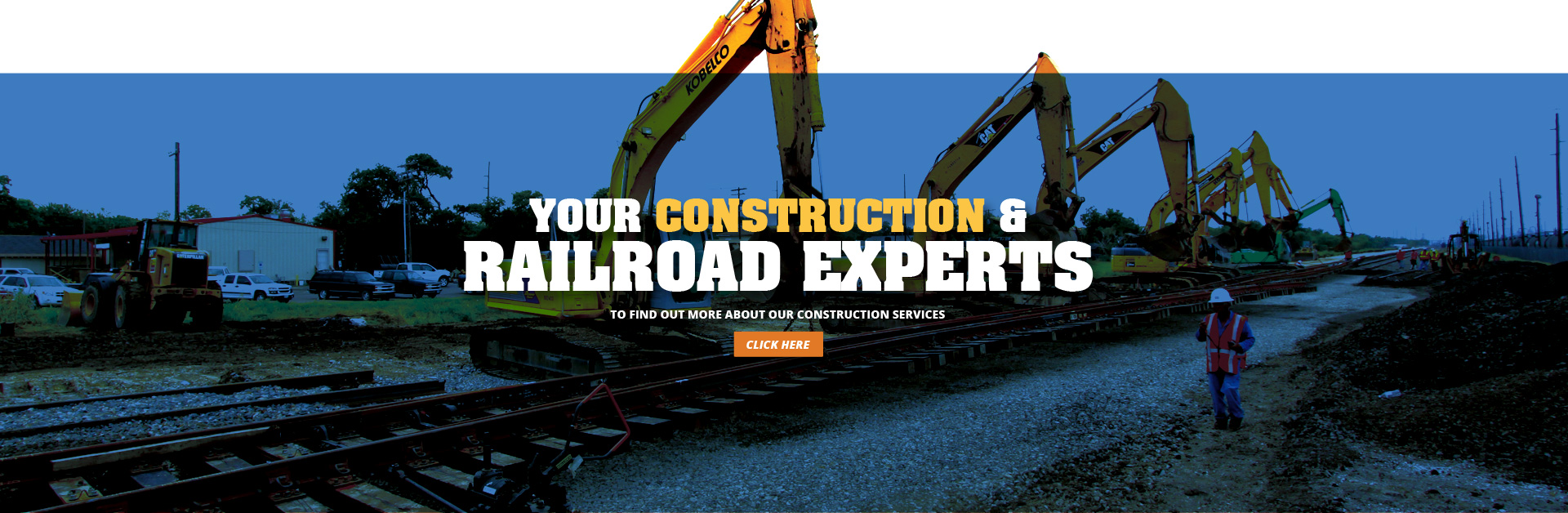
Experience: Over twenty-five years of bulk material handling experience. International Joint Venture experience. Site-specific design and engineering innovation. Complete engineering, fabrication, and construction services. Total railroad services, including in-plant switching, shortline operations, locomotive and railcar repair, railcar and locomotive leasing, and railroad maintenance/construction. These are the capabilities that have built the world of TGS.

This year over twelve million tons of bulk materials will flow through TGS operated bulk handling systems. More than two million railcars will be handled throughout the TGS network of railcar storage yards, shortline railroads, and in-plant switching sites. Nearly a thousand employees will work safely around the clock, serving customers across the country and around the globe. The TGS team has a single goal: Do what it takes to get the job done, safely, on time, efficiently and at the lowest possible cost.

Trans-Global Solutions, Inc., formerly Econo-Rail Corporation, began in 1976 in Port Arthur, Texas by offering railroad services. The company offered services ranging from loading and unloading railcars to railroad maintenance. As the company's reputation for safety, reliability, and quality grew opportunities also grew. Rail design and construction became part of the mix. Locomotive leasing and locomotive repairs were then added. Rail car storage, contract switching, and locomotive repairs came next.

As the company developed a reputation for getting the job done within refining and port operations, opportunities arose for the company to provide bulk material services. As Econo-Rail Corporation matured and entered into port and bulk terminal joint ventures with Mitsubishi Corporation and Cimentos Mexicanos for bulk terminal and rail related logistical services, it became clear that the name Econo-Rail Corporation no longer adequately described the broad capabilities of the company. Econo-Rail Corporation became Trans-Global Solutions, Inc., and the full-service rail division became TGS/Econo-Rail. The company added conveyor, engineering, fabrication, and errection in order to more dependably and efficiently develop grass roots bulk terminal facilities for its Fortune 100 customer base. Other TGS divisions include TGS/Houston Bulk Terminal, TGS/Beaumont Bulk Terminal, TGS/Engineering & Conveying Systems, and TGS/Construction & Erection.

Current bulk material operations include Exxon/Mobil Beaumont; Merey Sweeny L.P. (Phillips/PDVSA) in Sweeny, Texas; Lyondell/Citgo in Houston; TGS/Beaumont Bulk Terminal within the Port of Beaumont; TGS/Houston Bulk Terminal at the Port of Houston; and TGS Port Arthur Coker Company within the Premcor Refinery in Port Arthur, Texas. Rail operations now include fourteen in-plant industrial railcar-switching sites, two railcar storage yards, four shortline rail operations, (including the Austin Area Terminal Railroad), and complete locomotive and railcar repair facilities in Beaumont and Houston, TX.

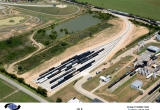
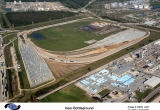
TGS is currently developing its fourth major "greenfield" ocean bulk terminal project in the last three years with construction of a new petroleum coke terminal on the south shore of the Houston Ship Channel adjacent to Shell Oil Corporation. TGS is designing, engineering, and constructing this new facility pursuant to a long-term contract with Royal Dutch Shell for the handling of all petcoke produced by the Shell Deer Park Refinery. With this project, TGS will exceed twelve million tons of bulk throughput guarantees per year. Upon completion, TGS will operate the new terminal with a throughput in excess of two million tons per year. This "greenfield" development is being built on 156 20 acres of land adjacent to the Shell Oil Refinery and will be known as the TGS/Deepwater Bulk Terminal. TGS Deepwater Terminal LP will own the new ocean terminal. TGS Deepwater Terminal LP owns an additional The remaining 120 135 acres of land, with access rights to the berth. This additional real estate is, are available for future terminal development. As of early January 2003 all dredging, dock conveyor gallery, and dock approach work haswork has been completed at TGS/Deepwater and the dock structures to accept the ship loader are being moved in to place. Fabrication of the overland conveyors from the refinery, the reclaim and outbound system,, stackers, and associated equipment continues at the TGS/Engineering & Conveying System's manufacturing facility in Houston. TGS/Construction & Erection, another TGS operating division, is performing all civil work, construction, and erection of the landside components of the terminal.

When complete, the system will receive petroleum coke at a nominal rate of 1000 tons per hour from the refinery to the stockpile. The coke will be loaded onto a curved-belt conveyor at an existing transfer tower within the refinery near the delayed coking unitcokers. Traversing both horizontal and vertical curves, the 48" wide curved-belt conveyor will transport the coke nearly 3000 feet from refinery property to a stockpile area at the new Deepwater Terminal. The coke is deposited by the curved-belt conveyor through a stacker elevated to 65 feet above grade with a 150-foot boom. Up to 500,000 tons maywill be stored within the eleven (11) acre stockpile area.

At the stockpile, the petroleum coke will be reclaimed for ship loading through a feeder system utilizing Caterpillar D-9 bulldozers. Stockpile dust control is achieved with a state of the art Rainbird dust suppression system. From the stockpile, the coke will be transported to the new 670 foot by 56 foot dock via a 54" wide, series of450-foot long conveyors with a nominal loading capacity of 3,000 tons per hour.

At the dock, the coke will transfer to a 600-foot long, 54" wide dockside conveyor connected to a rail-mounted Paceco traveling shiploader located on the new deepwater dock. The TGS terminal will accept ships up to Mini-Cape size. The system will allow rapid loading of ships with little or no shifting of vessels during the loading process at a rate exceeding 3050,000 metric tons per day.

Future development plans for the TGS/Deepwater Terminal include: 

  • Deepening of the draft at the dock to 45-feet in conjunction with the ongoing deepening and widening of the Houston Ship Channel by the U.S. Corps of Engineers and the Port of Houston Authority;
  • Installation of facilities for vessel discharge and conveying to storage; 
  • A barge-dock facility for the discharge of barges; 
  • The expansion of the stockpile area to accommodate additional dry bulk cargo; 
  • Dock improvements and piping capability to develop support a bulk liquid handling system, coupled with on shore tankage and pipeline connections; 
  • Rail improvements providing access to the TGS/Deepwater Terminal by the Port Terminal Railroad.

The terminal is ideally located on the South side of the Houston Ship Channel, adjacent to both Highway 225 and Beltway 8, both major industrial transportation corridors in the heavily industrialized chemical and petroleum area near Houston. In addition, the terminal is connected to both the UP and the BNSF rail lines via the Port Terminal Railroad.

TGS focuses on developing, in partnership with industry, complete, integrated bulk facilities. With its broad capabilities and experienced staff, TGS can develop bulk terminal and rail terminal projects from conception through design, engineering, fabrication, and construction. TGS is prepared to own and operate these facilities based on long-term throughput agreements or design, build, and operate customer owned facilities on a long-term basis.

An example of this complete development cycle is the recently commissioned TGS petroleum coke system within the Premcor refinery in Port Arthur, TX. The system was designed, manufactured, and erected by TGS. TGS also owns and operates the system under a long-term agreement with Premcor. In addition to operating the coke handling system, TGS is operating the overhead gantry cranes used to transfer the product to the TGS system as well as performing the cutting, deheading and heading activities at the 70,000 bbl per day Premcor delayed coker unit.

The coke handling system at Premcor originates at the delayed coking unit. A feeder draws petcoke from a hopper located adjacent to the petroleum coke pit. The petcoke is crushed to reduce any oversized productcustomer specifications. The petcoke is then transported by a 42" conveyor to the stockpile area 1,700 feet away at a nominal rate of 500 stph. At the stockpile area the petroleum coke is transferred to a 160' radial stacker allowing direct stacking to a height of 50 feet.

While in the stockpile the petroleum coke is handled by Caterpillar D-9 bulldozers that are used to stockpile and reclaim the product. Twin 72-inch dozer traps are used to feed the 60- inch belt conveyor system utilized in transporting the product to the twin ship loaders approximately 3,500 feet from the stockpile. The conveyor connecting the stockpile area to the shiploaders has a nominal capacity of 3,500 000 stph.

TGS designed the shiploaders to operate at an existing vessel berth within the 90-year old refinery. The twin shiploaders are located 90 feet behind the berthing line to clear all pre-existing piping and liquid vessel discharge equipment as well as the Corps of Engineers flood protection system. The ship loader booms shuttle in and out and rotate on a 30- foot diameter circle beam for radial ship loading, allowing variable reach from 110 to 206 feet. beyond the berthing line. This permits loading of typical Panamax class bulk vessels with minimal shifting during loading, thereby increasing loading efficiency and reducing vessel time in port

The ship loaders are further equipped with telescopic chutes and trimming spoons that provide the capability to load and trim hatches of the largest Panamax class vessels. The booms are 90 feet above mean low tide and can negotiate any on-deck structure. Normal operations utilize one shiploader at a time with the second shiploader positioned at the next hatch in the loading rotation. Both ship loaders are operated using wireless remote controls that are operated from the deck of the vessel. In addition to loading Panamax class vessels, the system also accommodates ocean barges and river barges, as well as Handy and HandyMaxsmaller-than-Panamax sized ships.

TGS has operated the TGS/Mitsubishi Neches River Terminal at the Port of Beaumont for over 10 years. A recent expansion of TGS' capabilities within the port is the design and construction of a railcar-to-ship direct loading system. The new facilities were developed in a public-private partnership between the Port of Beaumont and Trans-Global Solutions, Inc. The new rail-to-ship transfer facility is capable of unloading two railcars at a time. This capability allows TGS/Beaumont Bulk Terminal, the division of Trans-Global Solutions, Inc. that operates the facility, to discharge direct to vessel up to 116 100-ton railcars per day.. This discharge rate will allow in excess of 10,000 tons of material to be loaded into a typical bulk carrier per day.

The system was designed, fabricated, and installed by the TGS/Engineering & Conveying Systems division of Trans-Global Solutions, Inc. The rail-to-ship facility is equipped with a state-of-the-art dust suppression system utilizing (4) four separate dust collection bag houses with from ship dust collection capability. The loading system includes a high-tech loading spout capable of efficiently loading and trimming ships of all descriptions.

Rail service to the TGS/BBT facility in the Port of Beaumont is provided by four railroads: Burlington Northern-Santa Fe, Union Pacific, Kansas City Southern, and the Texas-Mexican Railroad. All railcar switching within the Port of Beaumont is handled by TGS/Econo-Rail switching crews.

With an impressive list of completed projects on the Gulf Coast, in the Caribbean, in Mexico and in South America, TGS has proven its ability to be responsive to industry's requirements for design, construction, and operation of bulk material transportation and logistics projects. The world of bulk materials is not an easy place to make a living. Hard work, long hours, as well as intelligent and persistent management are required. In the final analysis, the rewards for our industry partners are cost effective and dependable 24-7 service. The rewards for TGS are continued growth, profitability from economies of scale and the pride which comes from a job well done by the dependable and reliable men and women of TGS.

TGSŪ is a registered trademark of Trans-Global Solutions, Inc.

For further information visit our website at WWW.TGSGROUP.COM or call us at 713-453-0341