

Lake State Railway, TGS Cedar Port Railroad Earn ASLRRA Business Development Awards

The American Short Line and Regional Railroad Association (ASLRRA) recently announced that Lake State Railway (LSRC) and TGS Cedar Port Railroad (TGS Cedar Port) have earned Business Development Awards, “highlighting the innovative, out-of-the-box thinking that’s required to help short line railroads grow and thrive.” Both railroads will be honored at ASLRRA’s Annual Conference, taking place April 12-14 in Minneapolis, Minn.
Short line railroads are always working to attract new business, but expanding partnerships with current customers can be just as effective in driving economic growth for multiple stakeholders, ASLRRA noted. ASLRRA Business Development Award Winner LSRC proved exactly that through its recent work with longtime customer Specification Stone, “reshaping how aggregates move across Michigan.”
Lake State Railway
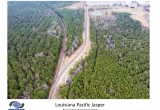
Though this project was 10 years in the making, recent completion of upgrades and a high throughput facility “have positioned LSRC and Specification Stone to grow significantly in the future,” according to ASLRRA. Already the customer has expanded the loading capacity in Alpena, diversified the stone types shipped and opened a new terminal near Flint, Mich.
LSRC leveraged its “strong relationships, local presence and entrepreneurial spirit to help move the project to completion.” As a result, ASLRRA says, “customers will have more competitive and reliable options for stone delivery in central and southern Michigan.” This will benefit large-scale aggregate customers like road construction companies, which further supports economic development in the region. LSRC expects stone volumes to increase significantly over the next several years.
Not satisfied with the status quo, LSRC turned a long-term customer relationship into a greater success story through grit and determination. Bringing its equipment and infrastructure into the 21st century “positioned LSRC to support shipper growth, resulting in significant benefits for the railroad, the customer and communities across Michigan.”
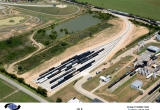
TGS Cedar Port earned this year’s award for development of a new railcar cleaning and transloading rack bringing together multiple ancillary railcar services, including cleaning, de-gassing, nitrogen padding, repairs, requalification, storage and transloading. This facility, ASLRRA says, “enables customers to eliminate multiple off-site moves per car, lowering costs, reducing dwell time and improving asset utilization.”
TGS Cedar Port Railroad
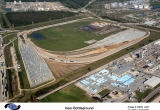
The TGS Cedar Port team recognized the inefficiencies its customers were experiencing, having to incur costs moving cars between different cleaning shops, repair facilities and storage yards. The completed project now offers customers complete vertical integration. Trans-Global Solutions (TGS), the railroad’s parent company, owns the industrial park and operates the cleaning and transloading rack. The park hosts repair companies and has more than125 miles of internal track served by TGS Cedar Port. There are also approximately 6,000 on-site railcar storage positions.
While taking advantage of these streamlined offerings sounds like a no-brainer for shippers wanting more efficient car services, TGS Cedar Port still needed to convince wary customers to shift their business, ASLRRA noted. To do so, TGS Cedar Port had to demonstrate “a superior economic value with lower costs and faster turnaround.” The marketing and operations teams worked together closely to bring in initial customers, offering introductory pricing and building strong relationships.
Once these early customers were on board, demand for services grew quickly. To date, the operation has cleaned more than 2,800 railcars and supported more than 3,000 associated truck movements. TGS Cedar Port has also added new full-time positions, as have the on-site repair companies. These services have attracted new tenants to the industrial park, “increasing local investment and tax revenue for the community while improving productivity for businesses.”