

Business Facilities’ 22nd Annual Rankings Report: 2026 Metro Rankings

The Business Facilities 2026 Metro Rankings include more than 25 categories focused on factors important to corporate relocation and expansion decisions. Now in its 22nd year, these rankings are designed to provide quick insight for site selection projects across North America and beyond. The rankings look at recent activity and performance, as well as considering future opportunities emerging in these states and provinces.
Cities are the economic engines behind the growth of states and regions. As part of the Annual Rankings Report, Business Facilities recognizes the activity and accomplishments occurring at the local level.
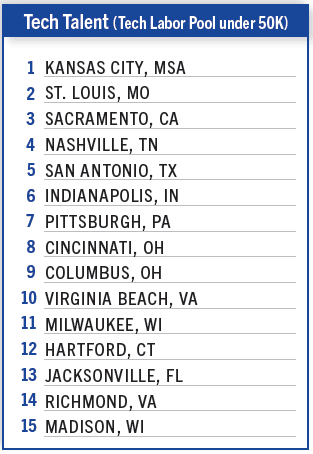
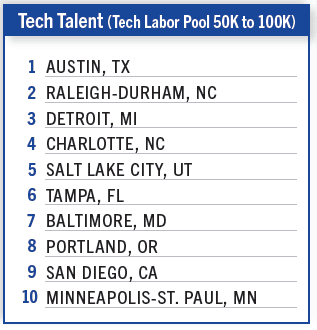
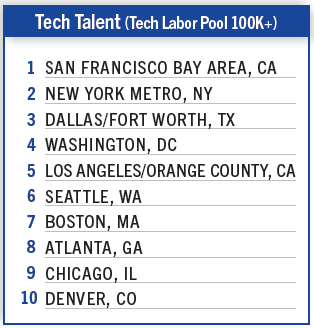
Tech Talent Leaders: The Future Is Here
The 2026 Business Facilities Tech Talent Leaders rankings recognize markets across three size categories by evaluating talent concentration, technology workforce growth between 2018 and 2024 and overall tech workforce strength. The rankings highlight that while major technology centers continue to lead in scale, smaller markets are increasingly building competitive talent pipelines.
Among markets with technology labor pools of 100,000 workers or more, the San Francisco Bay Area ranks No. 1, maintaining its position as one of the world’s most influential technology ecosystems. The region’s concentration of technology companies, venture capital, research institutions and highly skilled workers continues to drive leadership in software, artificial intelligence and emerging technologies.
New York Metro ranks second, reflecting the strength and diversity of its technology workforce.
For markets with technology labor pools between 50,000 and 100,000 workers, Austin ranks No. 1. The Texas market continues to demonstrate strong technology workforce growth, supported by expanding innovation hubs, a strong business environment and its ability to attract skilled professionals.
Raleigh-Durham in North Carolina ranks second, benefiting from the strength of the Research Triangle’s universities, research institutions and technology companies. The region’s deep STEM pipeline and concentration of innovation-driven industries continue to support growth in software, advanced research, life sciences technology and other technology-focused sectors.
Among smaller markets with technology labor pools under 50,000 workers, Kansas City ranks No. 1, reflecting the region’s growing technology ecosystem and expanding talent base.
St. Louis ranks second, supported by its strong foundation in research, innovation and technology-driven industries.
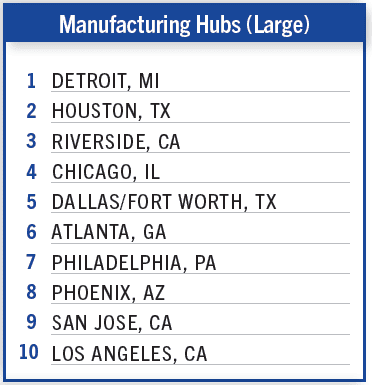
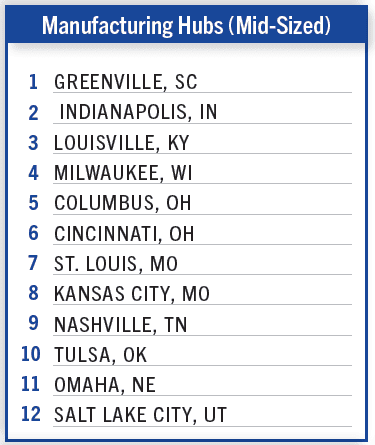
Manufacturing Hubs: Success In The Making
Manufacturing continues to be a cornerstone of the U.S. economy, supported by a diverse network of locations ranging from major metropolitan areas to smaller communities. The 2026 Business Facilities Manufacturing Hubs rankings recognize locations with strong manufacturing employment concentration, measured in part through location quotient, while also considering recent investment activity and industrial momentum.
Detroit, Michigan, ranks No. 1 among Manufacturing Hubs (Large Cities), reflecting the region’s longstanding role as the center of U.S. manufacturing and its continued evolution into an advanced industrial powerhouse. While historically recognized for automotive production, the Detroit region has expanded its manufacturing capabilities to include electric vehicles, batteries, mobility technologies, automation and other advanced manufacturing sectors.
The remaining top large-city manufacturing hubs are Houston, TX; Riverside, CA; Chicago, IL; Dallas/Fort Worth, TX; Atlanta, GA; Philadelphia, PA; Phoenix, AZ; San Jose, CA; and Los Angeles, CA.
Greenville, South Carolina, ranks No. 1 among Manufacturing Hubs (Mid-Sized), demonstrating how smaller metropolitan areas can compete through specialized industry strengths, workforce capabilities and strong manufacturing ecosystems. The region has built a reputation as a leading advanced manufacturing destination, supported by major investments in automotive, aerospace, chemicals and other industrial sectors.
The remaining top mid-sized manufacturing hubs are Indianapolis, IN; Louisville, KY; Milwaukee, WI; Columbus, OH; Cincinnati, OH; St. Louis, MO; Kansas City, MO; Nashville, TN; Tulsa, OK; Omaha, NE; and Salt Lake City, UT.
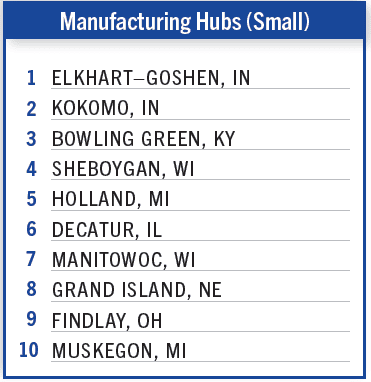
Elkhart–Goshen, Indiana, ranks No. 1 among Manufacturing Hubs (Small), highlighting the strength of specialized manufacturing communities. The region’s manufacturing concentration, particularly in recreational vehicles and related supply chains, demonstrates the ability of smaller markets to develop deep industry expertise and attract investment.
The remaining top small manufacturing hubs are Kokomo, IN; Bowling Green, KY; Sheboygan, WI; Holland, MI; Decatur, IL; Manitowoc, WI; Grand Island, NE; Findlay, OH; and Muskegon, MI.


Industrial Parks: Strategic Sites
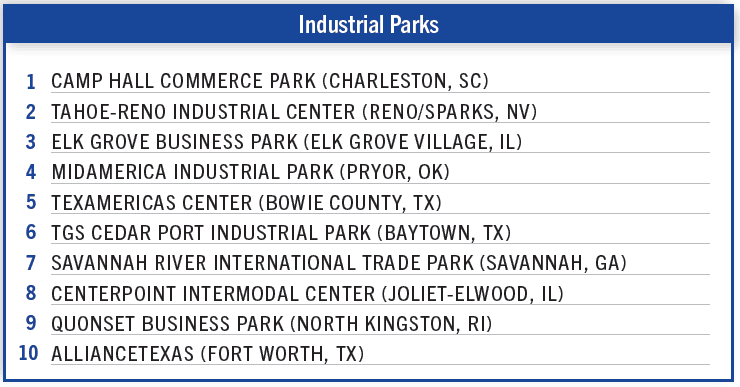
The 2026 Business Facilities Metro: Industrial Parks ranking evaluates locations based on manufacturing intensity and diversity, intermodal infrastructure and available land and development capacity. The rankings reflect the growing importance of industrial ecosystems that can provide not only space, but also the transportation connections and operational advantages companies need to compete.
Camp Hall Commerce Park in Charleston, South Carolina, ranks No. 1, recognized for its combination of available acreage, strategic location and access to major transportation assets. The park benefits from proximity to the Port of Charleston, a strong industrial workforce and a growing base of advanced manufacturing activity.
Tahoe-Reno Industrial Center in Reno/Sparks, Nevada, ranks second, reflecting its position as one of the largest industrial parks in the country and its success attracting major manufacturing and technology investments.
Elk Grove Business Park in Elk Grove Village, Illinois, ranks third, benefiting from its location within the Chicago metropolitan area and access to one of North America’s most important transportation networks. Its proximity to O’Hare International Airport, major highways and a deep industrial workforce provides companies with strong connectivity and supply chain advantages.
MidAmerica Industrial Park in Pryor, Oklahoma, ranks fourth, offering a large-scale industrial environment supported by available land, infrastructure and a diverse manufacturing base.
TexAmericas Center in Bowie County, Texas, ranks fifth, leveraging its extensive acreage, redevelopment opportunities and strategic location to support industrial growth.
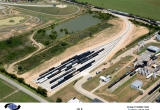
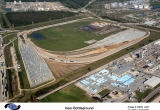
Rounding out the top 10 are TGS Cedar Port Industrial Park, Savannah River International Trade Park, CenterPoint Intermodal Center, Quonset Business Park and AllianceTexas.
Corporate Headquarters: Home Advantage
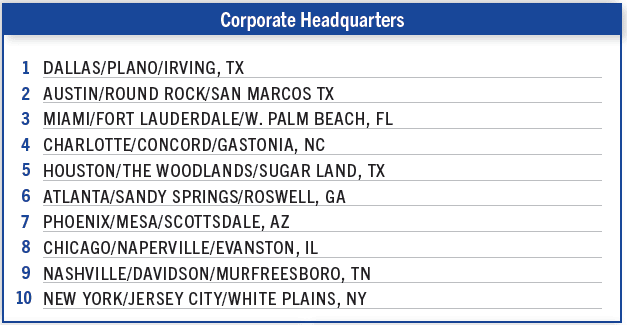
The 2026 Business Facilities Metro: Corporate Headquarters ranking focuses on metropolitan areas gaining headquarters activity and emerging as attractive destinations for corporate operations, while also considering existing concentrations of major corporate headquarters.
Dallas/Plano/Irving, Texas, ranks No. 1, reinforcing the region’s position as one of the nation’s leading corporate destinations. The Dallas-Fort Worth area continues to attract headquarters due to its diverse economy, strong workforce, central location, business environment and ability to support companies across industries. Its combination of available talent, infrastructure and connectivity has made it a leading choice for companies seeking a long-term headquarters location.
Austin/Round Rock/San Marcos, Texas, ranks second, reflecting the region’s rapid growth as a technology, innovation and corporate hub.
Miami/Fort Lauderdale/West Palm Beach, Florida, ranks third, benefiting from increased corporate interest, international connectivity and a growing appeal among companies seeking access to expanding markets and a dynamic business environment.
Charlotte/Concord/Gastonia, North Carolina, ranks fourth, supported by its strong financial services sector, expanding corporate base and skilled workforce.
Houston/The Woodlands/Sugar Land, Texas, rounds out the top five, combining a diverse industry base, global business connections and strengths in energy, healthcare, aerospace and manufacturing.
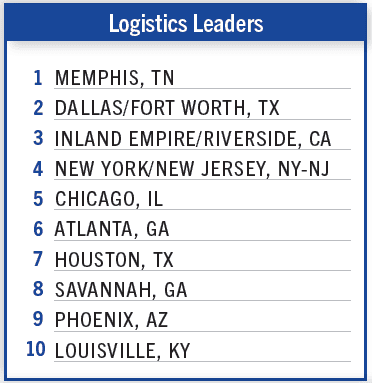
Atlanta/Sandy Springs/Roswell, Phoenix/Mesa/Scottsdale, Chicago/Naperville/Evanston, Nashville/Davidson/Murfreesboro and New York/Jersey City/White Plains complete the top 10.
While established headquarters locations remain important, companies are considering regions with a combination of talent availability, operational advantages, connectivity and the ability to support future expansion.
Life Sciences Hubs: Established & Emerging
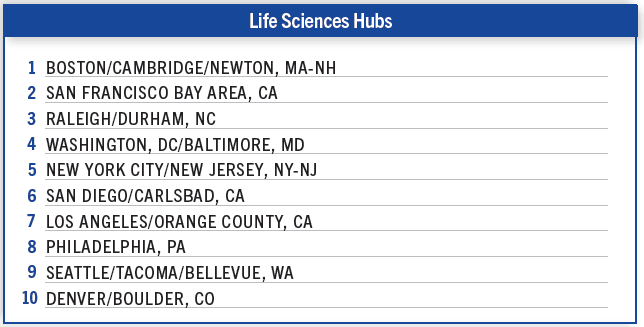
The 2026 Business Facilities Life Sciences Hubs and Emerging Life Sciences Markets rankings highlight both the nation’s established innovation centers and the communities building the infrastructure, talent and research ecosystems needed to compete for future investment. The Life Sciences Hubs ranking evaluates markets based on employment in life sciences research and development and manufacturing, along with industry growth, company concentration and the strength of research and university assets.
Boston/Cambridge/Newton, MA-NH ranks No. 1, maintaining its position as one of the world’s premier life sciences ecosystems. The region’s strength comes from its concentration of biotechnology and pharmaceutical companies, leading research institutions, academic medical centers and highly skilled talent.
The San Francisco Bay Area ranks second, supported by its globally recognized technology and biotechnology ecosystem.
Raleigh/Durham, NC ranks third, reflecting the continued growth of the Research Triangle as a major life sciences hub. Anchored by leading universities, research institutions and an expanding biomanufacturing sector, the region has become a key location for companies seeking talent, innovation resources and manufacturing capabilities.
Washington, DC/Baltimore and New York City/New Jersey round out the top five established hubs, followed by San Diego/Carlsbad, Los Angeles/Orange County, Philadelphia, Seattle/Tacoma/Bellevue and Denver/Boulder.
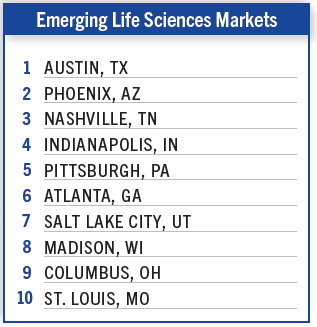
The Emerging Life Sciences Markets ranking takes a broader view of developing ecosystems, considering company presence, workforce concentration and research and university resources.
Austin, TX ranks No. 1, reflecting the city’s rapid expansion as a life sciences destination. Its growing technology ecosystem, research capabilities, business climate and ability to attract talent have helped create new opportunities for biotechnology, medical technology and advanced health innovation companies.
Phoenix ranks second, benefiting from expanding healthcare and research infrastructure, a growing talent base and increased investment in life sciences manufacturing and innovation. Nashville ranks third, supported by its nationally recognized healthcare sector, research assets and strong business ecosystem.
Indianapolis, Pittsburgh, Atlanta, Salt Lake City, Madison, Columbus and St. Louis complete the top 10 emerging markets. Together, these communities demonstrate that life sciences investment is increasingly moving beyond traditional hubs toward markets offering specialized talent, research partnerships and room for continued growth.